c

Sunday, 8 March 2015

Bohemian Life in Buenos Aires

Streets of Buenos Aires

After a fantastic start to 2014, we were ready to conquer the capital of Argentina. Before we arrived in Buenos Aires, we reserved a loft through Airbnb which turned out to be incredibly cheap. Our host Martin greeted us and showed our huge room for the next twelve days.

On our first night in this lively city, we met Juan Pablo and his girlfriend. We asked them directions to a nearby restaurant and they were happy to take us there. On the way, talked about our travels and experiences. He invited us to a party at his place after half an hour of meeting. I just love the openness, friendliness and enthusiasm of the Argentinean people. They are full of joy and happiness. We caught up with Juan Pablo a couple of times during our stay in this beautiful city and became good friends.


Street Musicians


Buenos Aires is a big, vibrant city that provides incredible cultural and historical points of interests. Some of the must see places are La Boca, Plaza de Mayo, Teatro Colon, Casa Rosada, MALBA, San Telmo Markets, Palermo, El Tigre, Retiro, Puente de la Mujer and Japanese Gardens. There is so much to discover in this incredible metropolis. Our time was filled with sightseeing, art museums, tango and milonga shows, graffiti tours, and amazing music. This is a city of culture, art, dance, melancholy and joy.
Street Tango


Argentina is famous for its meat and steaks. Although, I don’t eat a lot of meat any more, I wanted to try if they were living up to the expectations. We went to a local parrilla in Palermo Soho neighbourhood. Parrilla means grill or steakhouse in South America. At Don Julio,  I tasted the best steak I have ever had in my life, accompanied with a delicious red wine called Septima. The whole experience was divine. Here is an article by the Guardian on top 10 restaurants in Buenos Aires if you like to indulge yourself.


There are also some amazing bakeries and gelato (ice-cream) shops in Buenos Aires. We tried many of them and one of our favourite ones was Fratello in Palermo. But there are so many others, so feel free to make up your own opinion.

If you have a sweet tooth like I do, you definitely need to try the “Alfajores” which is a traditional shortbread sandwich filled with dulce de leche (caramel filling). We certainly put on a couple of kilos during our time in Argentina.   
   

We really enjoyed out time in Buenos Aires but I couldn’t imagine myself living there. Although, it is full of art and culture, it is simply too crowded. The metro is always full and there is a lot of traffic. For me it is a great city to visit but not to live. However, Alex mentioned that she could easily live in Buenos Aires for a couple of year. We will see... 


Sunday, 15 February 2015

New Year in Rosario

After four sleepless nights in Cordoba, it was time to visit our friend Mariana, whom we met in Santiago de Cuba in August. We took a bus to from Cordoba to Rosario and arrived at 4:30 pm. 

After a shower and a bit of relaxation in the hostel, we had sushi for dinner for the first time in 8 months. The challenge of travelling is that you don't always get to eat the food your like, however you get the taste lots of different cuisines. 

We were quite tired after long nights in Cordoba, hence decided to go to bed early. What a bliss to sleep without all that noise and party! However, about an hour later, we were woken up by little visitors, BED BUGS!!! NOOOOO! They were everywhere and had bitten us multiple times already. We moved into another room in the middle of the night. I was agitated and tired. I managed to fall asleep for a while but then woke up again with more bites on my legs. It was a total nightmare.

We checked out the first thing in the morning. The owner of the hostel was very upset and didn’t want to charge us. We paid him half of the price and started to look for another place. After half a day of search, we found a beautiful guest house run by an awesome lady, Luli. She had done an incredible job and turned this beautiful house into an authentic and warm guest house that anyone would enjoy. It is called Sikkim and I would highly recommend this Petit Hostel if you are finding it hard to sleep in Argentina. Many thanks to Luli for her hospitality and providing a clean and safe environment.


Lounge room at the Sikkim Guest House


After moving into our new place, we went out to meet Mariana and her Cuban husband Juan whom we met in Trinidad. It was great seeing them again. We had a couple of mojitos that were prepared by Juan who is a bartender. We met also Mariana’s sister, Carolina and had a beautiful night full of laughter.

The next day was the 31st of December 2013. It was time to say goodbye to a magnificent year. A year of joy, adventure, challenge, gratitude, friendship, curiosity, bliss, transformation, flow, and fatigue. This year, we had met wonderful people, discovered incredible places, gained trust and self-confidence, healed our wounds, connected with our families, lived fully, saw old friends and made new ones, enriched our souls, passed hurdles in our relationship and most importantly broke the routine. It was very valuable to learn how restricting routine can be for our evolution. I feel very grateful for this opportunity to have these amazing experiences. Thank you UNIVERSE! Life is magical when you live it to the fullest without fear. 

Mariana kindly invited us to spend the New Year’s Eve with her family in San Nicholas which about an hour from Rosario. The guests started to arrive around 9:30 pm when the BBQ was already on. We were told that Argentineans buy half a kilo of meat per person for these occasions. And yes it is true that they have the best meat in the world. 

There were seventeen of us including Mariana’s grandfather, aunts, uncles, and cousins. After a fantastic dinner with lots of BBQ meat, we were invited to participate in one of their family traditions. Each person wrote down on a paper what they have achieved in 2013 and their goals and wishes for 2014. It was an ideal way to end a year and start the new one.


Some of Mariana’s friends started to arrive around 11 pm. Soon after we finished dinner, it was time to cheer for the New Year. We danced and celebrated the arrival of 2014. At 4:30 am, they decided to go to a club. We were surprised but didn’t say no. After many months of travelling we had learn to go with the flow. Around 6:30 am we decided to go back home due to exhaustion. A big thank you to Mariana, her family and the Argentinean people for their amazing hospitality, warm hearths and joyful friendships. It was a fantastic New Year’s Eve we won’t forget.


New Year Party (Argentinian Style)


We woke up quite late the next day and drove to Mariana’s uncles’ summer house. We finished the leftovers from the night before and drank some mate. Mate is a traditional herbal drink in South America, especially in Argentina, Uruguay and Brazil. It is made by an infusion of dried leaves of yerba mate. It is usually drunk with friends and family by using the same cup and drinking straw. Not a good idea if you have issues with germs! After some relaxing time in the pool, we said goodbye to those wonderful people and caught a bus back to Rosario for one last night. 

According to our experience, Argentineans are one of the friendliest nations in the world. They are very interested in meeting new people and learning about different cultures. I am very grateful to have spent the New Year with great friends in this beautiful country. We really loved it!


Thank you Mariana and to her whole family! Muchos Besos!

Saturday, 31 January 2015

Cordoba, Argentina

Cathedral in Cordoba

After three memorable days in Cafayate, we took a bus to the Tucuman province. Once again we witnessed some amazing landscapes on the way before arriving at the capital city San Miguel de Tucuman at 7 pm. We didn’t like the vibes in this city, and caught an overnight bus to Cordoba the same night. This is the beauty of travelling and going with the flow: you never feel stuck in a situation or in a place you don't enjoy.

We arrived at Cordoba in the early morning of December 24th 2013. We thought spending Christmas in the second biggest city of Argentina would be fun. We took a taxi to the Link Hostel . It is an OK place to stay but wasn’t extraordinary. The problem we had was that we arrived in Cordoba in the middle of a heat wave and our room didn’t have air-conditioning. The ceiling fan was simply not enough and it was very close to the upper bunk-bed which did not feel safe at all. We decided to stay the night with the hope that it might cool down in the evening.


Streets of Cordoba

In the afternoon, we walked around in the city and exchanged some more “Blue Dollars”. Each province has different rules and regulations. While we didn’t have any problems exchanging money in the middle of a street in Salta, the process was slightly more hidden in Cordoba. We were taken into a news agency where we couldn’t be seen from outside while exchanging dollars. An interesting fact about Argentina was that the more south we travelled, the more expensive it got.

We spent the Christmas night in the hostel as nothing was open. Thankfully, we still had some wine and cheese from Cafayate, so we enjoyed a nice dinner! We joined the hostel staff and few travellers on the rooftop to watch the fireworks. It was a fun night but we couldn’t sleep much because of the heat. The next day, we decided to look for another hostel.

Light show in Cordoba


After visiting a couple of places which were either not open during Christmas or fully booked, we found a quiet hostel not too far from the city centre. We had a good afternoon nap and went out to the movies. I couldn’t believe how cheap the cinema tickets were. We paid $10 for both of us whereas in Sydney we used to pay around $18 if not more per person. Cinema was a brilliant idea with outside temperatures more than 40 degrees Celsius. And yes, they had air-conditioning.

A surprise was waiting for us when we got back to our room. We discovered that there was an open air techno club right next door. Noooo! Another sleepless night. Later we were told that Cordoba has one of the biggest student population and there are many bars and clubs in the New Cordoba where we were staying. We checked out in the morning and went to Villa Carlos Paz, a small village by the San Antonio River, which is not more than an hour away from Cordoba. It is quite popular amongst the locals for its relaxed vibes and cultural activities.


San Antonio River
It was great to get out from the oven of Cordoba. Carlos Paz felt like a seaside town without the sea. However, there is always the option of cooling down in the shallow streams of San Antonio River. Indeed, we saw many locals relaxing by the river. At night, we went to our first theatre performance in Argentina. The play was called "Toc Toc" and it was a comedy about a psychotherapist treating people with different Obsessive-compulsive disorders. Although it was in Spanish, I managed to understand most of it thanks to my teacher’s (Magus) great efforts in Ecuador.

The next day, we returned to Cordoba for one more night. This time we stayed at the Tango Hostel which turned out to be a good address. During our last day in Cordoba, we visited La Manzana Jesuitica or Jesuit Square which was declared as a World Heritage Site by UNESCO, Evita Fine Arts Museum and  Museo Palacio Ferreyra, both were excellent art museums.

Evita Fine Arts Museum

After four sleepless nights in Cordoba, it was time to visit Mariana whom we met in Santiago de Cuba in August. 

Saturday, 17 January 2015

Life is beautiful in Salta and Cafayate

Streets of Salta
After three quiet days in Tilcara, we made our way to the next province to visit the vibrant city of Salta. Situated in the Lerma Valley, this exciting city provides well preserved colonial architecture and a colourful atmosphere that any tourist would enjoy.

When we arrived at the bus station, we were approached by some agents who wanted to promote their hotels. We usually don’t trust them but I am glad we did this time. One of them offered us a private from for $25 and a free ride to the hotel Posada del Parque which was a fantastic deal. I think the prices are usually higher, so make sure to ask for specials if you want to stay there. We had a huge room with an en-suite bathroom and a separate dressing room. It had TV and air-conditioning as well. We felt like we were in a palace after so many hostels.


Cathedral of Salta


I simply loved Salta. It has everything that a liveable city needs to have. There are outstanding museums, impressive churches, beautiful squares and great authentic Argentinean cuisine. It has the facilities of a large city but retains the comfortable vibes of a small town. In addition, the people are very welcoming and friendly. There were also a lot of free cultural activities such as concerts and dance performances. I could easily live in this charming city.


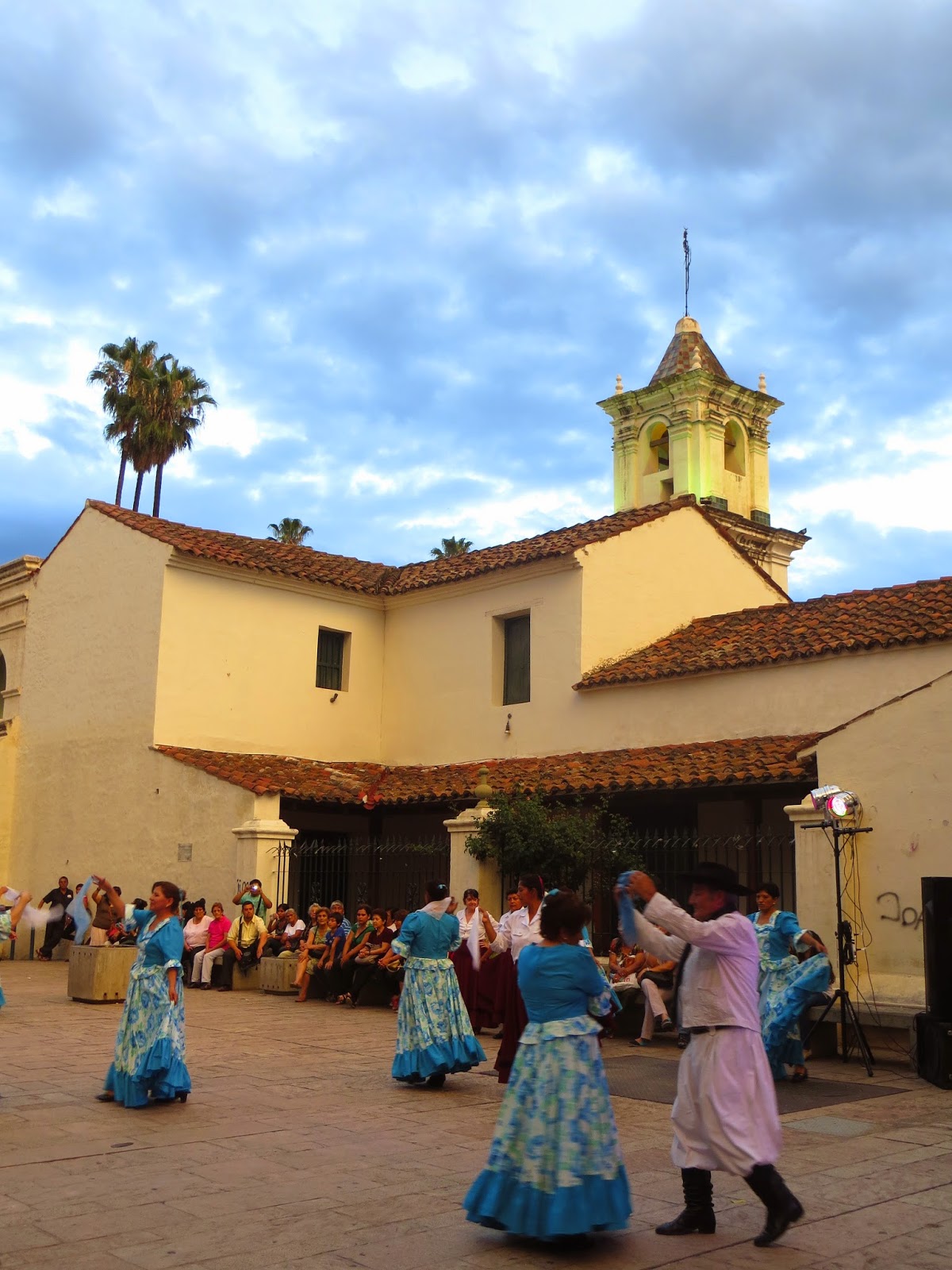
During our four days in this lovely town, we visited the Cathedral of Salta, Church of San Francisco, Salta Teleferico (cable car), Plaza 9 de Julio, Centro Cultural America and some parks. There are also many museums to discover. Of course, you can’t leave Salta without watching the dances of gauchos dressed up in billowing pants and leather boots. There are numerous local penas on Balcarce Street where you can enjoy these traditional shows while you try typical Argentinean dishes. If you like to know more about Salta’s folklore culture you can read the article of Megan Snedden from BBC Travel.


Dancing Gauchos


I was sad to leave this fantastic town but we weren’t disappointed with Cafayate either. Cafayate is a small town 2 hours south of Salta. We chose this romantic town for our 5th wedding anniversary which is Argentina’s second centre for quality wine production (after Mendoza). Before visiting this amazing country, I haven’t even heard about their wine. Now, we were visiting some of the world’s best vineyards. This region is famous for its Malbec but we tried many other quality wines. According to Wikipedia, Argentina is the fifth biggest producer of wine in the world today.


Alex with our adopted dog


We rented two bicycles to visit the beautiful surroundings and of course a couple of wineries along the way. Biking is the perfect way to discover these incredible landscapes. On our way to some rock formations and Cascades de Rio Colorado, a street dog started to tag along and followed us the whole day.  She was very cute and we absolutely loved her. She came all the way to the cascade with us and wouldn't leave us alone.

The nature and the landscapes were stunning. It took us a bit more than an hour to get there. After visiting the Cascades of Rio Colorado, it was time to try some of the high quality wine of Cafayate. 
   
Our first stop was the Bodega Nanni which became one of my favourite vineries in the area. It has been producing some of the best organic wines for the last 110 years. They have great Malbecs and Torrontes. We ended our adventurous day in one of the local restaurants and tried some of the traditional dishes. Argentina is a meat country, and it is really difficult to survive if you are a vegetarian.  


Happy goats


The next day started with a visit to the Cabras de Cafayate which is a goat farm where they produce remarkable cheese. The entry fee includes a tour of the farm and we got to see many happy goats. At the end, a mouth watering cheese sampling was provided. If you like cheese, this is the place to visit. Being French and loving cheese, it was a paradise for Alex.


Wine tasting at Bodega Domingo Molina
Following our cheese tasting, we rode our bikes to Bodega Domingo Molina. It is a 7km uphill ride from Cafayate and is certainly not for the faint hearted. I managed to get there on my bike, but Alex had to walk the last kilometre or so and was exhausted once we got there. We were welcomed by the friendly staff and taken to the garden with a magnificent view of the Calchaquies Valley. The scenery was definitely worth the uphill ride. After relaxing for half an hour, they started to introduce some of their splendid wines accompanied by cheese from the goat farm we visited in the morning. Our wine tasting lasted for three hours. We became good friends with one of the employees and he kept serving us more wine while we were chatting away. It was a perfect afternoon.

On our way back to town, we made a quick stop to visit Piatelli Winery and restaurant. We definitely had enough wine by then but we couldn’t resist their delicious salads. They also had one of the best olive oils I have ever tasted. With a view over the valley, it is a perfect place to enjoy lunch. 


Piatelli Winery

Sunday, 4 January 2015

Hola Argentina!

Purmamarca Village
After 4 magnificent days in the Atacama Desert, we took a bus towards Salta on the 12th of December 2013. During the journey we witnessed some incredible landscapes and rock formations. Border crossing between Chile and Argentina was a lot quicker than the one between Bolivia and Chile. We spent just half an hour with the friendly border control officers and were welcomed to Argentina with smiles.

Before talking to the manager of Hotel Quechua in Chile, our plan was to go directly to Salta. However, the manager convinced us to visit a very small town called Purmamarca which is famous for its seven coloured mountains. Purmamarca is a town of Jujuy which it the northest state of Argentina. Some people believe that it is culturally closer to Bolivia than Argentina.


Streets of Purmamarca


We got off in this little town without knowing much. Once again we were going with the flow and following the synchronicities of life. It was the start of a new adventure in a magical country of South America. After a short walk in this tiny town, we found our accommodation for the night. It was basic but that is all we needed for a decent sleep.

If you are planning to visit Argentina, make sure to bring lots of American hundred dollar bills. It is possible to exchange them in local shops and receive almost the double amount of the official exchange rate. This is called the “Blue Dollar” and is created due to high inflation and strict   government control. Blue Dollar makes Argentina a very affordable country to tourists. We easily exchanged some of our American dollars in a local silver shop. We bought a special pen that helps to identify fake banknotes. Although, we didn’t come across any fake bills, it was a good investment for security.    


Seven Coloured Mountains
The next morning we hiked around the Seven Coloured Mountains which indeed had seven different colours. It was nice hike which took about an hour to complete. Then we visited some local shops and bought a alpaca ring for Alex, which is a local metal similar to silver. 

After lunch we caught a bus to Tilcara which is another small town in the province of Jujuy. Pre-Inca ruins and lively festivals are some of the highlights this magical town has to offer. The area features dramatic mountainous landscapes and rich aboriginal traditions.


Pucara de Tilcara


We arrived in Tilcara at midday and found a nice little hostel (Club Hostel Tilcara) with a beautiful garden. It was quiet, peaceful and provided a good breakfast. The owners were also very accommodating. The only problem was that we had our first experience with the bed bugs since the beginning of our journey. They were very apologetic and gave us a new room straight away. The next day, they smoked the room and took the mattresses out which hopefully should have solved the problem.


Visiting hidden caves with Alejandro


You can easily spend a good couple of days in Tilcara. We did a tour with a local guide Alejandro Xavier organised through our hostel. He has an indigenous background and provided insightful information about the Andean culture. He explained a lot about their traditions and mentioned that they have 4 main energies which are the Sun, Pachamama (the Mother Earth), wind and water. He told us about the connections between these energy systems and how we are all connected. We visited 2 hidden caves and spent some time in the dark talking about our traumas. It was a therapeutic experience. He also looked at some coca leaves to tell our future which was quite interesting. We spent 5 hours with him and it was a very pleasant day.

Tilcara is famous for its penas which are small local restaurants that host different folkloric musicians. We visited a couple of them and had the luck to listen some of the most incredible local musicians playing instruments I had never seen before. There are plenty of penas in the area, so you won't get bored. Click on the link to see a typical pena experience with unique instruments.

On our last day in this serene town, we visited the infamous ruins of Pucara de Tilcara which is just a short walk from the town. It is located on a hillside with a striking view of the Rio Grande Valley. The partial reconstruction of these Pre-Inca ruins gives a good understanding about the lifestyle back then. After 3 days in Tilcara, we were ready to visit the next state, Salta.